
From R&D to
Device Submission:
Computational Modelling
and in-silico Evidence
for Orthopaedic Devices
Reducing Physical Testing Without Reducing Regulatory Confidence
16 June 2027 at 15:00:00
Time & Location
16 Jun 2027, 15:00 – 16:00 CEST
Webinar
About the Event
Why Physical Testing Alone Is Becoming a Bottleneck
Bringing an orthopedic device to market requires solid evidence that the design performs safely and reliably under real world physiological loading. Traditionally, that evidence has come almost entirely from physical testing, an approach that is slow, costly, and often means late discovery of design issues, right when changes are most expensive to make. Regulatory bodies, including the FDA, increasingly recognize computational modeling as valid supporting evidence, opening a path to earlier insight and fewer physical test iterations without lowering the bar on safety or performance.
Webinar Scope
In this webinar, 4RealSim will explore how in silico methods can support FDA submissions for orthopedic devices, such as joint implants, spinal fixation systems, and fracture fixation hardware. Participants will learn how simulation-based evidence fits into a regulatory strategy, what the FDA currently expects from computational modeling submissions in this space, and how in silico testing can reduce reliance on physical prototypes while strengthening, not weakening, the overall evidence package.
Topics Covered
Why physical testing alone slows down orthopedic device development
How the FDA views in silico evidence in regulatory submissions
Building a credible in silico evidence package for orthopedic devices
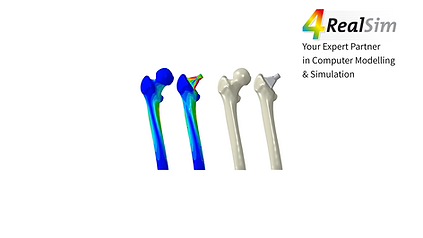
Simulating structural, wear, and fatigue performance of orthopedic implants
Reducing physical test iterations without reducing regulatory confidence
Positioning simulation results alongside traditional test data
Practical considerations for model verification and validation
What In Silico Evidence Delivers
Earlier insight into design performance, well before physical prototypes exist
A credible, FDA recognized path to reduce physical testing
Faster iteration in design changes during development
A stronger, more complete regulatory evidence package
Who Should Attend?
R&D and design engineers working on joint implants, spinal systems, or fracture fixation devices
Regulatory affairs professionals building FDA submission strategies
Teams looking to reduce reliance on costly physical prototype testing
Anyone exploring how silico evidence fits into a medical device approval process
